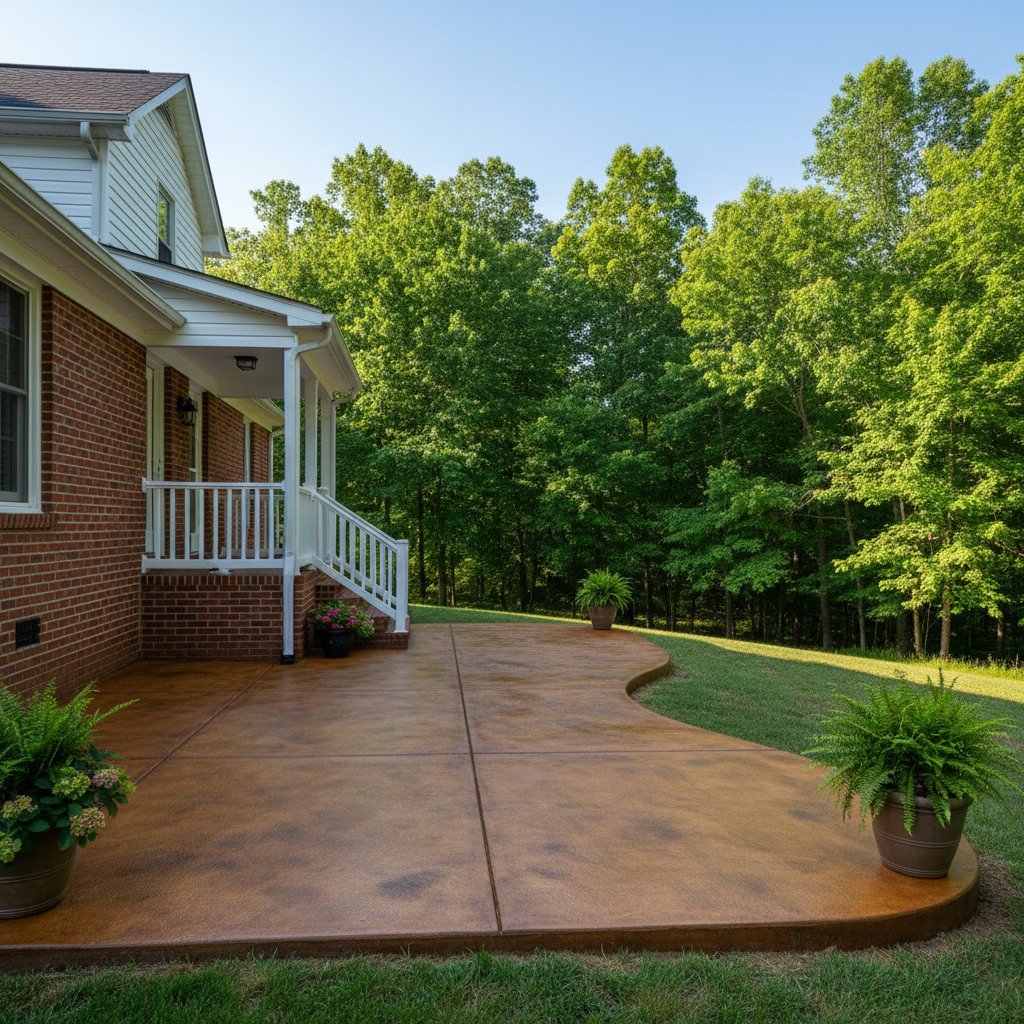
You are thinking about staining your concrete. That is a great way to make a patio, driveway, or even an indoor floor look better. For us in Rogersville, just like with other concrete work, you cannot just pick a sunny Saturday and do it. Our local climate has a big say in when you should stain as well as how you should protect that investment.
When to Schedule Your Concrete Staining Project
When it comes to Concrete Staining, timing is important. You want to find that good time when temperatures are right. You also want to make sure Mother Nature is not causing problems. For us here in Rogersville, that usually means spring and fall are your best times for Concrete Staining.
- Spring (Late April to Early June): After we get past those early spring rains, late April and May offer good weather for Concrete Staining. The temperatures are usually mild. They are often between 50°F and 85°F. This temperature range is good for the stain to work right with the concrete. You will also find humidity levels are usually lower than in summer. This helps stop blotchiness as well as cloudy sealers.
- Fall (September to October): This is a very good time of year for staining outdoor concrete around Rogersville. The summer heat has usually gone down. This gives us steady, moderate temperatures. These temperatures are good for a slower, more even cure of the Concrete Staining. In addition, rain tends to be less in October. This makes it easier to plan without worrying about unexpected rain. Skies are also clearer in September for Concrete Staining projects.
You should avoid the extreme temperatures for Concrete Staining in Rogersville. Trying to stain in the middle of winter when temperatures are regularly below 35°F is not a good idea. The stain will not work right. You also risk freezing damage to your Concrete Staining. On the other hand, staining in the peak of our humid Rogersville summer, especially July and August, can cause problems too. High heat can make the stain dry too quickly. This can lead to streaks as well as an uneven finish. In addition, those muggy conditions we get, especially in July, can affect the drying times. They can also cause sealers to dry cloudy on your Concrete Staining project.
Weather Conditions That Affect the Work
It is not just about the month for Concrete Staining. It is about the daily conditions. Here is what we at Majestic Concrete Co always look at before we start a Concrete Staining job in Rogersville:
- Temperature: As we mentioned, 50°F to 85°F is the good range for both air and concrete surface temperature. If it is too hot, the stain dries too fast. You will get an inconsistent look on your Concrete Staining. If it is too cold, the chemical reaction slows down. The stain will not go into the concrete correctly. Remember, concrete holds heat. So, even if the air cools down in the evening, the slab itself might still be too warm if it has been in the sun all day.
- Humidity: Our summers here in East Tennessee can get very muggy. High humidity means moisture in the air. That can get in the way of the stain bonding evenly with the concrete. It can also make sealers dry with a hazy, cloudy look. Low to moderate humidity is what you want for a clean, bright finish on your Concrete Staining.
- Moisture/Rain: This one is easy to understand. You absolutely cannot stain concrete if there is a chance of rain. Even a light rain can ruin the application. It can cause blotches or wash away the stain completely. Our team always checks the forecast for a solid 24-48 hour dry window for Concrete Staining. The concrete needs to be completely dry before we start. It also needs time to cure without getting wet.
- Wind: Wind is not as important as temperature or rain. However, strong winds can also cause problems. They can make stains dry too quickly. They can also carry dirt onto your freshly stained surface.
Protecting Your Stained Concrete Year-Round
Once your concrete is beautifully stained, you want to keep it that way. Protection is important. This is especially true with our Rogersville weather. Our weather can give us humid summers as well as freezing winters.
The most important step is putting on a good quality sealer. This is not just about making it shiny. It is about making a protective layer. A sealer will do these things:
- Guard against moisture: This is very important for us. Our yearly rain is around 48 inches. That moisture can cause problems like mold, mildew, as well as freeze-thaw damage in winter. A sealer helps stop water from going into the concrete.
- Resist stains: From oil drips on a driveway to spilled drinks on a patio, a sealer makes your stained concrete much better at not absorbing stains.
- Prevent fading: UV rays from the sun can slowly fade your beautiful stain over time. Many sealers offer UV protection. This keeps your color looking bright longer.
- Reduce abrasion: Foot traffic, vehicle traffic, as well as general wear and tear can wear down the surface. A sealer adds a layer of toughness.
We recommend putting on sealer again every few years. This depends on the traffic as well as the exposure your concrete gets. For busy areas like a driveway, you might need it more often. For a covered patio, you will need it less often. It is always better to be ready than to react when it comes to protecting your Concrete Staining investment in Rogersville.
Beyond sealing, here are some other tips for year-round care of your Concrete Staining:
- Regular Cleaning: Sweep or hose off your stained concrete regularly. This removes dirt, leaves, as well as other debris. For tougher dirt, use a mild, pH-neutral cleaner and a soft brush. Avoid harsh chemicals or rough scrubbers. These can damage the sealer or even the stain itself.
- Address Spills Quickly: The faster you clean up spills, especially things like oil, grease, or acidic liquids, the less chance they have to go through the sealer and stain the concrete.
- Winter Care: Rogersville does not get a lot of snow. We get about 7 inches annually. However, we do get freezing temperatures. Avoid using de-icing salts on stained concrete. These salts can be very harsh. They can break down the sealer as well as damage the concrete. Sand is a safer choice for traction. Also, make sure water is not sitting on your stained surfaces and freezing. This freeze-thaw cycle can cause cracking as well as spalling.
- Protect from Heavy Objects: If you are moving heavy furniture or equipment, use pads or dollies. This helps prevent scratching or gouging your stained surface.
Staining your concrete is a great way to add character as well as curb appeal to your Rogersville home. Just make sure you are paying attention to the weather. You also need to give it the protection it needs. You will enjoy that fresh look for many years to come.