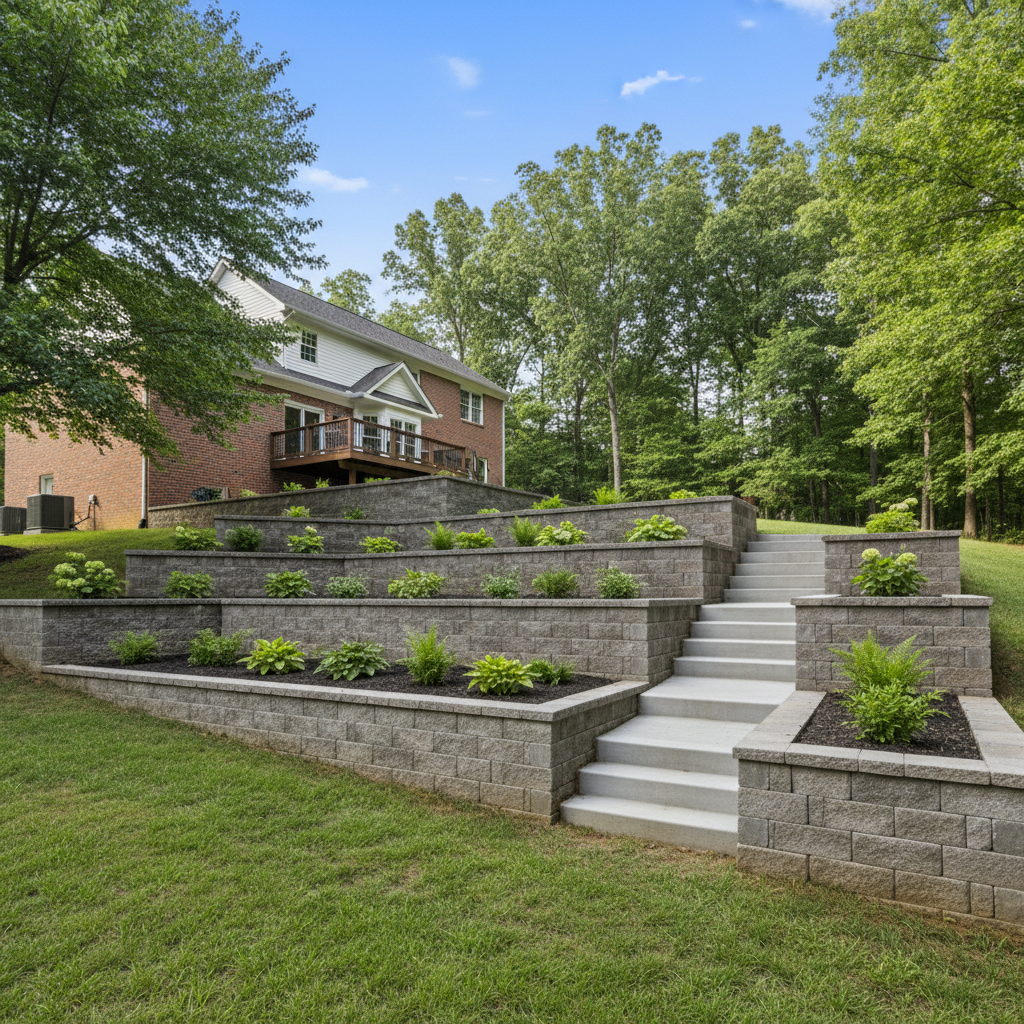
You've got a slope in your yard, maybe some erosion, or you're just looking to create some usable flat space. A concrete retaining wall can be a fantastic solution. But I've seen my fair share of folks around Rogersville get it wrong, and trust me, a bad retaining wall isn't just an eyesore, it can be a real headache and a costly fix. Let's talk about the biggest mistakes I see homeowners make.
Mistake #1: Skimping on the Site Assessment and Design
This is probably the number one blunder. People see a slope and think, 'I'll just put a wall there.' They don't consider what's actually happening with the soil, the water, or the load the wall will need to hold. Rogersville's got some pretty varied terrain, from the flatter areas near Cherokee Lake to the steeper hillsides further out. That soil can be clay-heavy and hold a lot of water, especially after a good spring rain. You can't just guess at the design.
A proper site assessment looks at soil type, drainage patterns, the height of the wall, and what's going to be behind it – a patio, a garden, or just more dirt. Without this, you're building blind. You need a design that accounts for hydrostatic pressure (that's water pushing against the wall) and the sheer weight of the earth. If you don't, you'll end up with a leaning, cracking, or even collapsing wall. I've seen it happen, and it's always more expensive to tear out a failed wall and rebuild it right than to do it right the first time.
Mistake #2: Ignoring Drainage – The Silent Killer
This ties right into the first point, but it's so critical it deserves its own mention. Water is the enemy of any retaining wall. If you don't have adequate drainage behind the wall, water builds up. It saturates the soil, making it heavier, and then it pushes against the wall with immense force. Even the strongest concrete can only take so much.
You need a good drainage system. That usually means a layer of gravel or crushed stone directly behind the wall, and a perforated drain pipe (often called a 'French drain') at the base, running the length of the wall. This pipe collects the water and directs it away, usually to an open area or a storm drain. Without it, your wall is a ticking time bomb. It's not optional; it's essential. Don't let a contractor tell you it's an unnecessary extra. If they do, that's a huge red flag.
Mistake #3: DIYing a Wall That's Too Big or Complex
I'm all for homeowners tackling projects, but some things are best left to the pros. A small, low garden wall? Sure, go for it if you're handy. But anything over three or four feet high, or a wall holding back a significant amount of soil or a structure, is not a DIY job. There are engineering principles involved, specific compaction requirements, and a whole lot of heavy lifting.
I've seen folks try to build taller walls themselves and they just don't have the equipment or the know-how for proper footings, reinforcement, and drainage. They end up with something that looks good for a year or two, then starts to bulge or crack. You're dealing with tons of earth; it's not a small-scale project. If you're unsure, get a professional opinion. It could save you a lot of grief and money in the long run.
Mistake #4: Choosing the Wrong Contractor (or No Contractor at All)
This one's a biggie. Not all concrete guys are retaining wall experts. Some are great at flatwork, like driveways and patios, but don't have the specialized knowledge for retaining walls. You need someone who understands soil mechanics, drainage, and proper reinforcement. Ask for references, look at their past retaining wall projects, and don't just go with the cheapest bid.
A good contractor will ask a lot of questions, explain their process, and usually won't be the absolute lowest price because they're factoring in all the necessary steps for a durable wall. Be wary of anyone who gives you a quote without even seeing the site or asking about drainage. At Majestic Concrete Co, we make sure we understand your specific situation before we even talk numbers, because every wall is different.
Mistake #5: Forgetting About Permits and Regulations
Depending on the height and location of your retaining wall, you might need a permit from the city or county. This isn't just bureaucracy; it's there to ensure the wall is built safely and won't cause issues for your property or your neighbors. Ignoring permits can lead to fines, forced demolition, or even liability if your wall fails and damages someone else's property.
A reputable contractor will know the local regulations and help you navigate the permitting process. Don't assume you can just build it and hope nobody notices. It's always better to be upfront and follow the rules. It protects you and ensures your investment is sound.
Building a concrete retaining wall is a significant investment. Do your homework, ask the right questions, and don't cut corners. You want a wall that's going to stand strong for decades, not one that's going to give you nightmares. Get it right the first time, and you'll be enjoying your new, usable space for years to come.