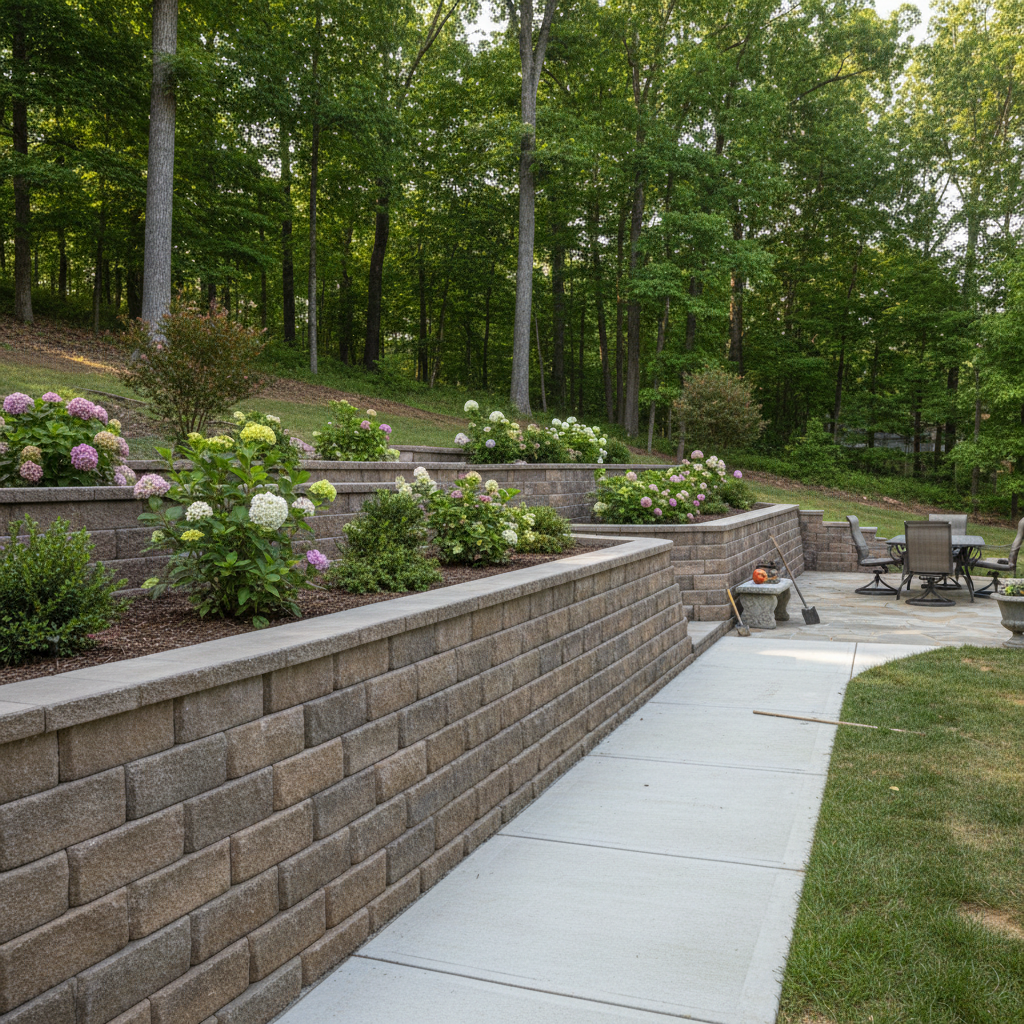
You need a retaining wall. Maybe your yard's got a slope that's washing out, or you're trying to create some usable flat space. A concrete retaining wall is a solid, long-lasting solution. But I've seen folks around Rogersville make some real head-scratching mistakes that end up costing them a lot more time, money, and headache than they ever expected. Let's talk about how you can avoid those.
Ignoring the Ground Beneath Your Feet
This is probably the biggest one. You might think, "It's just a wall, how hard can it be?" Well, it's a wall holding back tons of earth and water. The ground it sits on, and the ground it's holding back, matters. A lot. Here in Rogersville, we've got a mix of soil types, and sometimes you hit that red clay that's great for holding water but not so great for drainage without proper planning.
If you don't account for soil conditions, drainage, and the actual load your wall will bear, you're setting yourself up for failure. I've seen walls crack, lean, and even collapse because the homeowner or a cut-rate contractor didn't bother with proper engineering or site prep. You need to know what's going on underground before you ever pour a drop of concrete.
Skimping on Permits and Professional Design
Another common mistake? Thinking you can just build it. For most retaining walls over a certain height (often around 4 feet, but check with Hawkins County building codes), you're going to need a permit. And with that permit usually comes the requirement for an engineered design. This isn't just bureaucracy; it's about safety and longevity.
A professional engineer will calculate the forces on your wall, specify the right materials, rebar, and drainage systems. Trying to bypass this step is like building a house without a foundation plan. It's risky, illegal if you get caught, and if something goes wrong, your insurance might not cover it. Don't let someone tell you, "Oh, we don't need a permit for that." If they do, that's a huge red flag.
Choosing the Wrong Contractor (or DIYing Too Much)
Look, I get it. Everyone wants to save a buck. But a retaining wall isn't a weekend DIY project unless it's tiny and purely decorative. This is structural work. Hiring the cheapest guy with a pickup truck and a shovel often leads to disaster. You need someone with experience specifically in concrete retaining walls, not just general landscaping.
Here's what to look for:
- Proof of insurance and licensing: Don't just take their word for it. Ask for certificates.
- References: Talk to past clients. See their work if possible.
- Detailed bids: A good bid breaks down materials, labor, and all the steps involved. If it's just a number on a napkin, walk away.
- Understanding of local codes: Do they know what permits are needed and how to get them?
- Specialization: While Majestic Concrete Co does a lot of different concrete work, we specialize in structural elements like retaining walls. You want someone who knows the ins and outs of this specific type of project.
And for goodness sake, don't try to tackle a large, load-bearing wall yourself unless you're a qualified engineer or contractor. The cost of fixing a failed wall far outweighs the savings of doing it yourself poorly.
Neglecting Proper Drainage
Water is the enemy of retaining walls. If you don't have a robust drainage system behind your wall, water will build up, creating immense hydrostatic pressure. This pressure will eventually push your wall over, crack it, or cause it to bow. It's not a matter of if, but when.
A proper retaining wall design includes things like gravel backfill, perforated drain pipes (weep holes), and sometimes even geogrid reinforcement. Don't let a contractor skip these steps to save a few bucks on materials or labor. It's a critical component that determines the wall's lifespan.
Focusing Only on Price, Not Value
I see this all the time. Homeowners get three bids, pick the lowest one, and then wonder why they have problems a year or two later. The lowest bid often means corners are being cut – cheaper materials, less experienced labor, skipped steps like proper compaction or drainage.
When you're comparing bids, look at what's included. Does it cover engineering? Permits? Proper rebar? High-quality concrete? A solid drainage system? A warranty? A slightly higher price upfront for a properly built wall by a reputable company like Majestic Concrete Co will save you a fortune in repairs and headaches down the road. A retaining wall is an investment in your property's stability and value, so treat it that way.
Take your time, do your homework, and ask a lot of questions. A well-built concrete retaining wall will serve you for decades. A poorly built one will be a constant source of frustration.